
ABOUT THE DOCUMENTARY
After a devastating trial, artist Artemisia Gentileschi becomes the unexpected face of a new art movement amidst personal tragedy and public scrutiny.
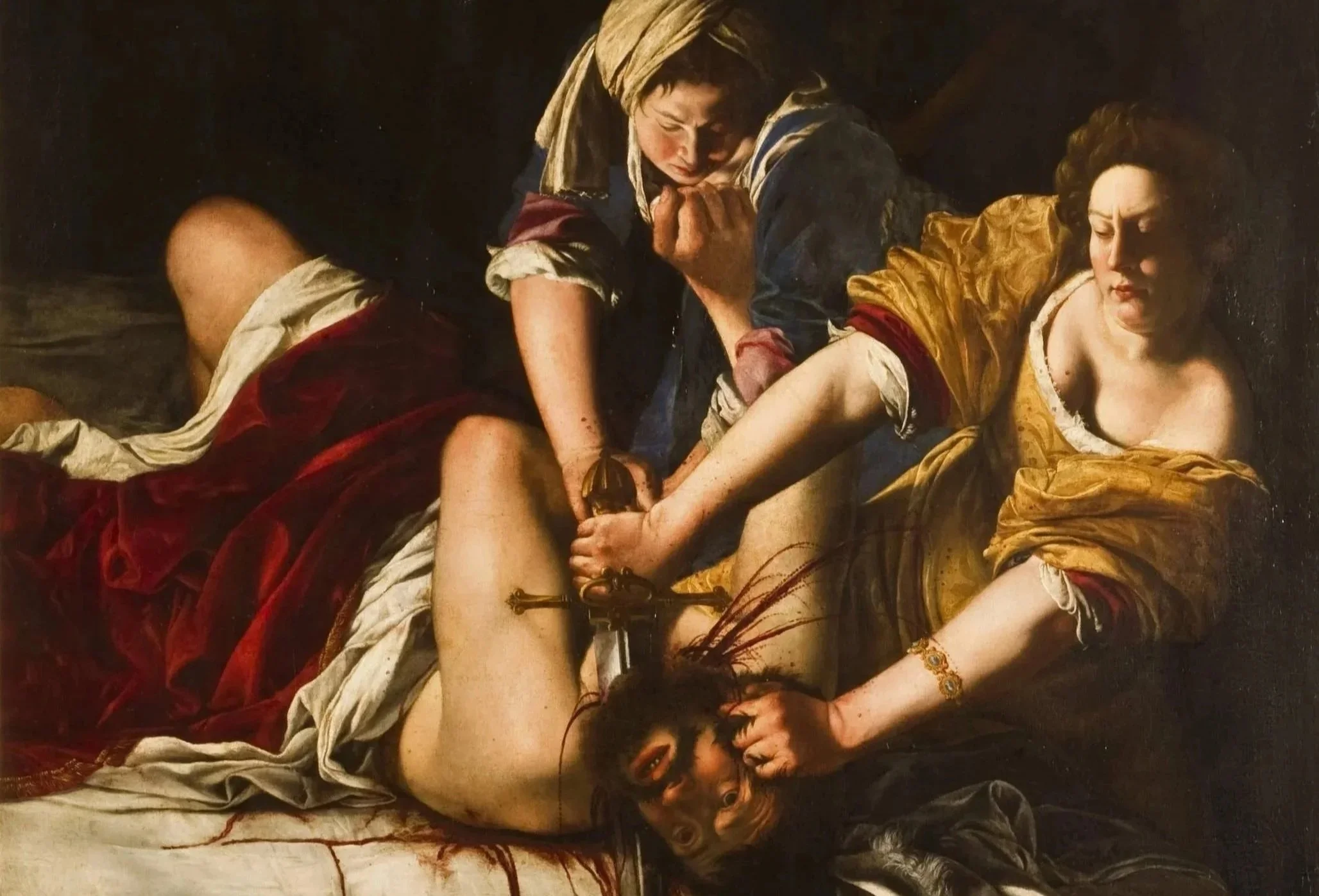
SYNOPSIS: The film begins by giving context on Artemisia’s life, defining the Reformation, Counter-Reformation, Baroque Art and insight into the lives of 16th and 17th-century Italian women.
The film then covers Artemisia’s early life, the death of her mother, artistic failures of her brothers, and training with her father, artist Orazio Gentileschi (and his friendship with the Baroque artist Caravaggio, one of the 17th century’s most famous painters).
In 1611, at age seventeen, Artmeisia was raped by her father’s coworker, painter Agostino Tassi, resulting in a trial in which she was tortured during her testimony.
After the trial, Artemisia married and moved to Florence, where her career flourished, and she secured patrons like the De Medici’s. This chapter of her life is told through careful analysis of her paintings and ingenious (and sometimes salacious) marketing tactics she used to raise her artistic profile, despite limitations placed on her as a woman.
The story then examines her later career, including her return to Rome, social triumph in Venice, time in Naples, and journey to England, where she may have reunited with her estranged father. Motherhood and the disappearance of her husband feature prominently as her career unfolds.